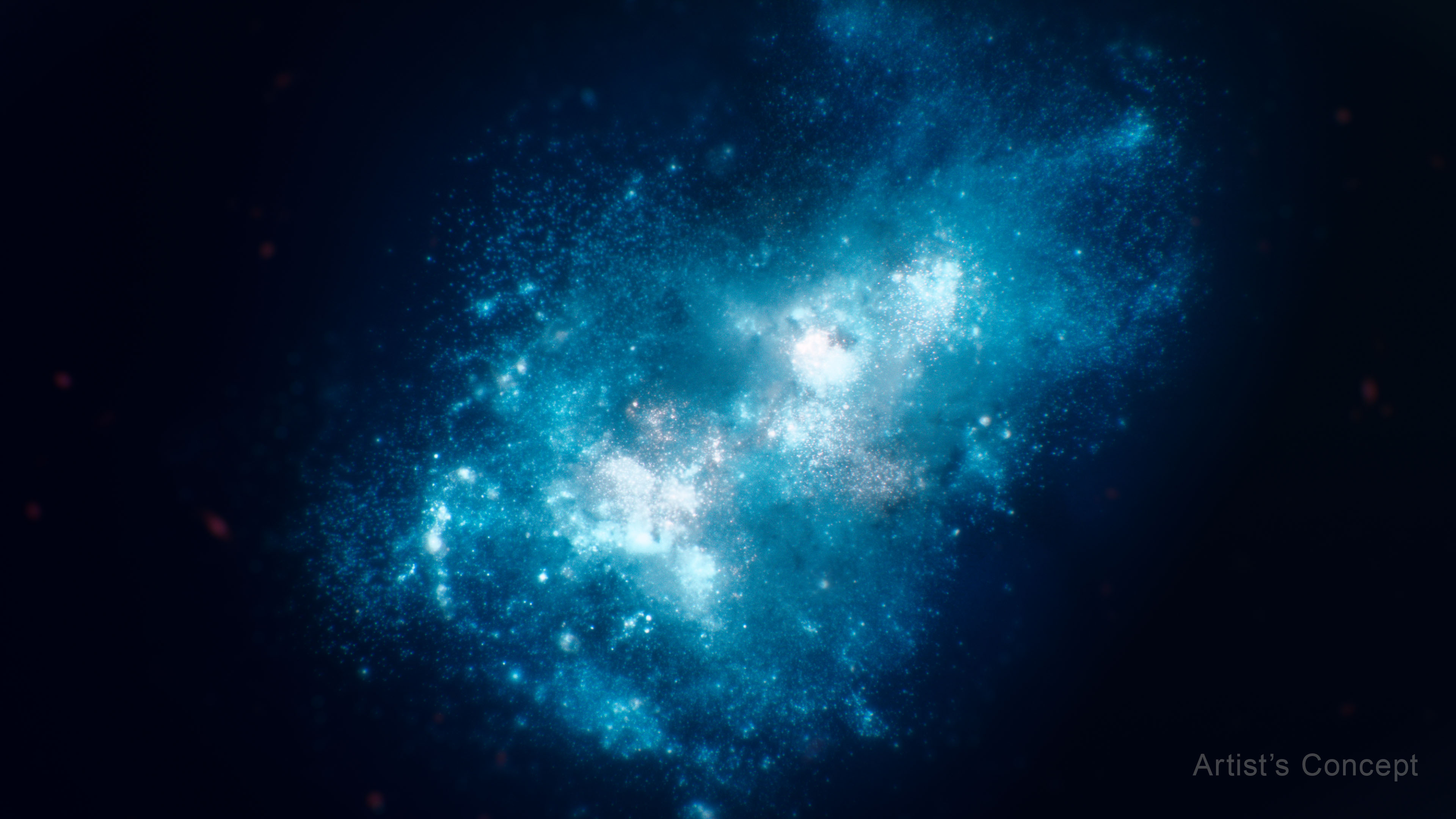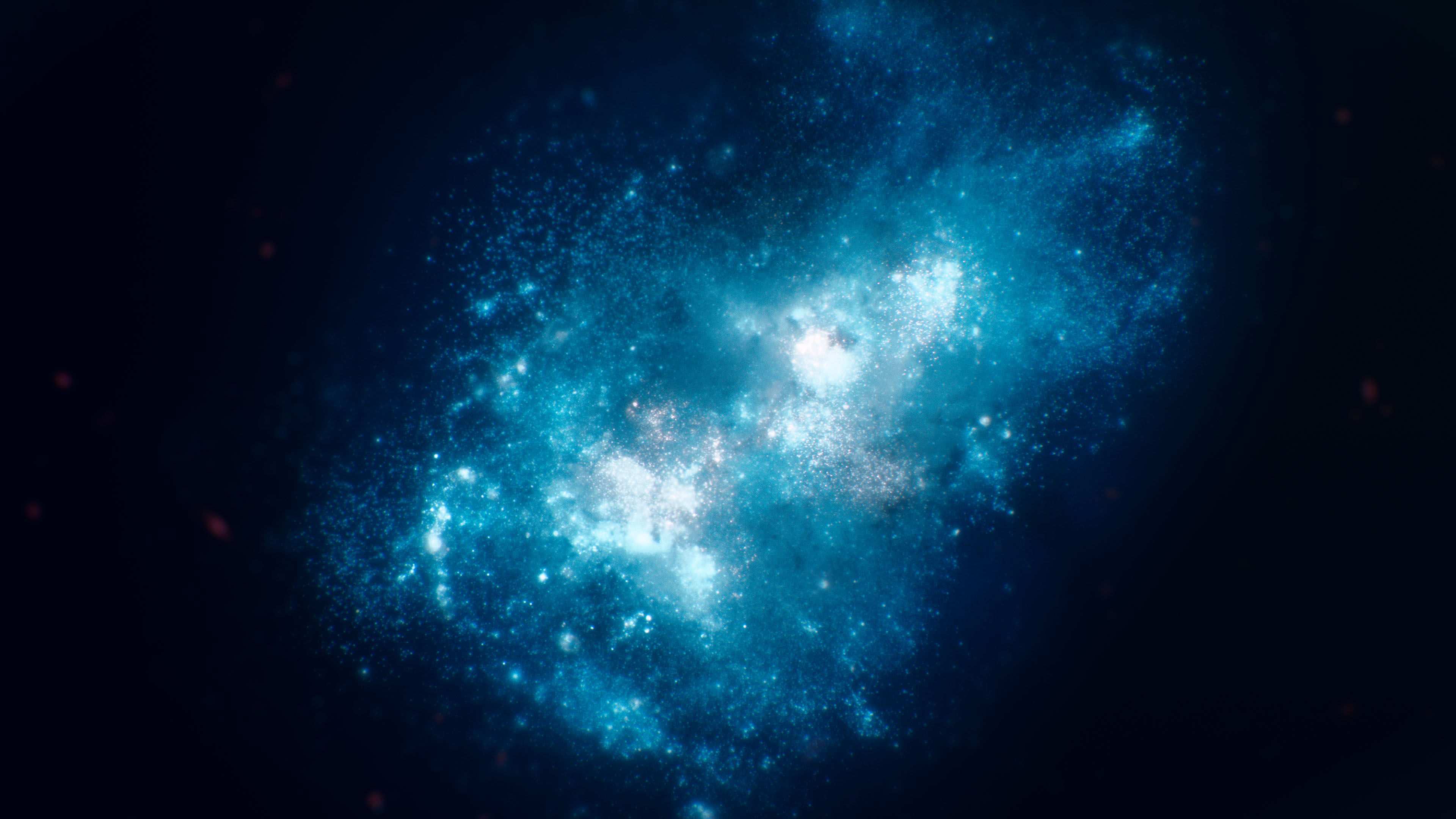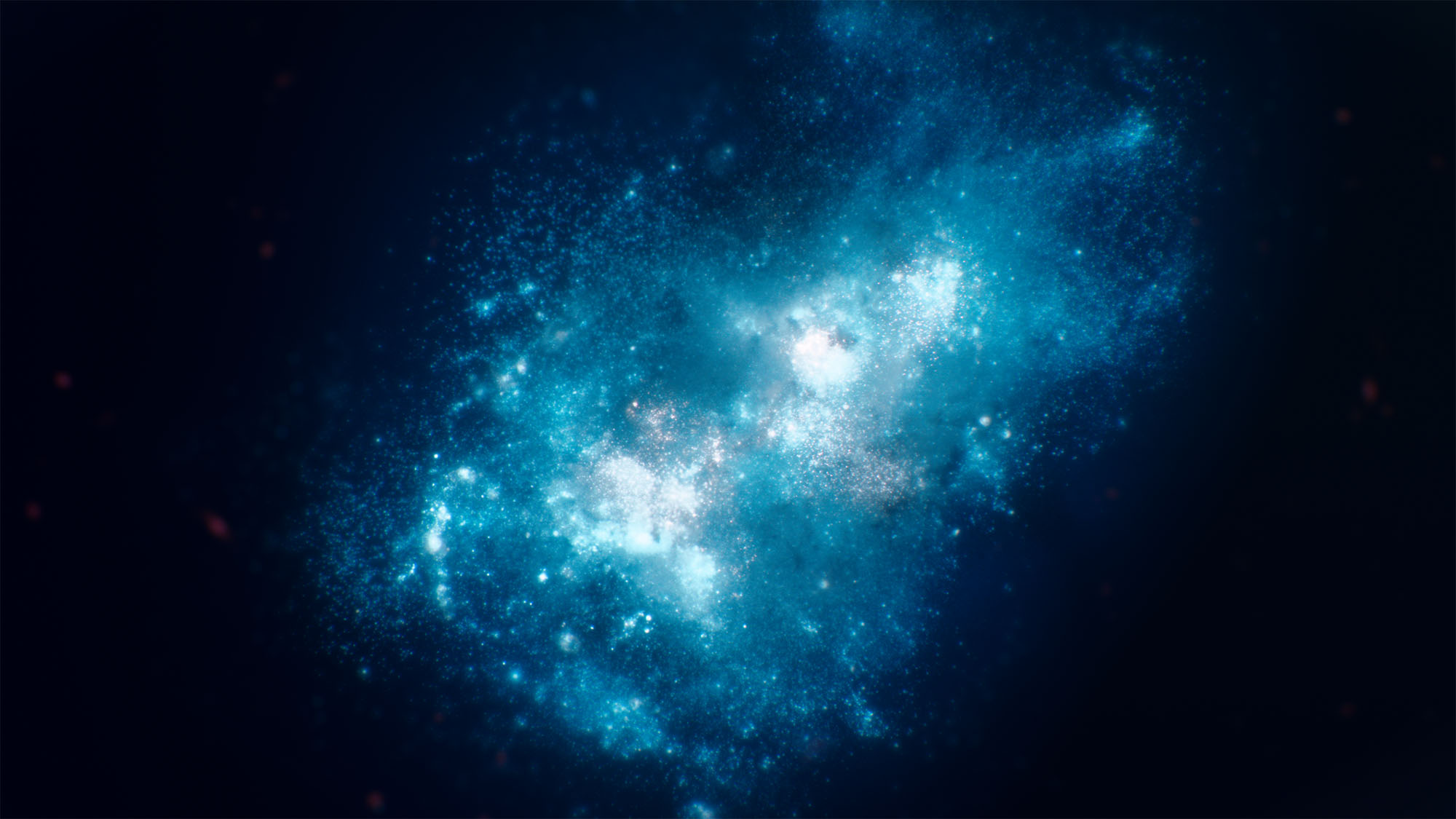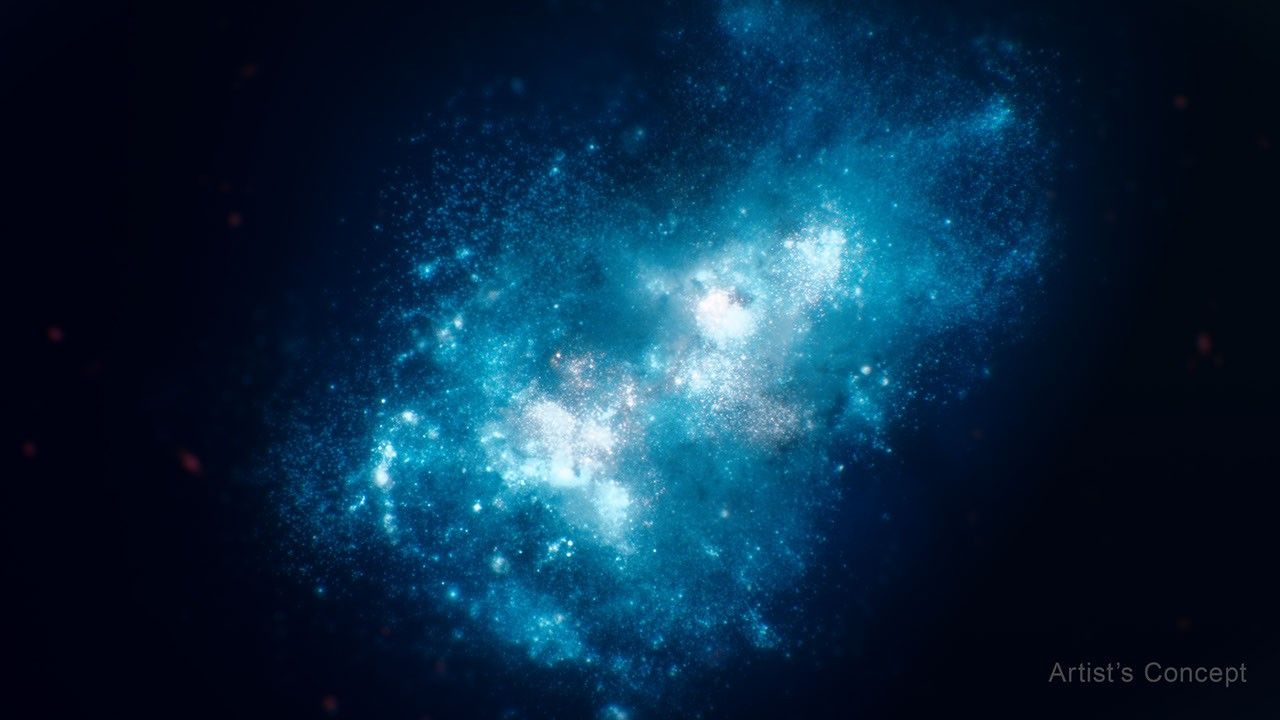
This illustration portrays galaxy MXDFz4.4, which was bursting with young, massive stars that were tightly packed together. The galaxy existed only 1.4 billion years after the big bang, when the universe was still a mix of opaque and transparent gas as the Era of Reionization was gradually ending.This concept is based on images and data from NASA’s Hubble Space Telescope, which show the younger stellar populations, and NASA’s James Webb Space Telescope, which detail the galaxy’s older stars.A research team led by Ilias Goovaerts, a postdoctoral fellow at the Space Telescope Science Institute (STScI) in Baltimore, used Hubble to show that the galaxy’s younger stars formed within the last few million years of the galaxy’s existence and transformed the space around them from opaque to clear.MXDFz4.4 is about 100 times smaller by area than our Milky Way galaxy, but it is forming stars up to 10 times faster.This concept is based on images and data from NASA’s Hubble Space Telescope, which show the younger stellar populations, and NASA’s James Webb Space Telescope, which detail the galaxy’s older stars.A research team led by Ilias Goovaerts, a postdoctoral fellow at the Space Telescope Science Institute (STScI) in Baltimore, used Hubble to show that the galaxy’s younger stars formed within the last few million years of the galaxy’s existence and transformed the space around them from opaque to clear.MXDFz4.4 is about 100 times smaller by area than our Milky Way galaxy, but it is forming stars up to 10 times faster.
Image Description: Illustration shows a closeup of a galaxy forming in the early universe. It appears chaotic and takes up most of the frame, from bottom left to top right. At the center are several bright white and blue blobs, which are areas of concentrated star formation. The blue becomes slightly darker in areas around this, taking up more than half of the galaxy’s overall size. There are smaller regions of bright blue star formation throughout this section. The galaxy’s edges, also irregularly shaped, are a medium blue, and smaller areas of star formation are apparent. The black background of space surrounds the galaxy.
Image Description: Illustration shows a closeup of a galaxy forming in the early universe. It appears chaotic and takes up most of the frame, from bottom left to top right. At the center are several bright white and blue blobs, which are areas of concentrated star formation. The blue becomes slightly darker in areas around this, taking up more than half of the galaxy’s overall size. There are smaller regions of bright blue star formation throughout this section. The galaxy’s edges, also irregularly shaped, are a medium blue, and smaller areas of star formation are apparent. The black background of space surrounds the galaxy.
| Release Date | June 23, 2026 |
|---|---|
| Science Release | Hubble Details Early Galaxy Transforming Neighborhood |
| Credit | Illustration: NASA, ESA, Leah Hustak (STScI) |
| Last UpdatedLocationContact | Jun 23, 2026NASA Goddard Space Flight CenterMediaClaire Andreoli NASA’s Goddard Space Flight Center Greenbelt, Maryland [email protected] |
| Last Updated | Jun 23, 2026 |
| Location | NASA Goddard Space Flight Center |
| Contact | MediaClaire Andreoli NASA’s Goddard Space Flight Center Greenbelt, Maryland [email protected] |
| Related Terms | Hubble Space Telescope, Galaxies |